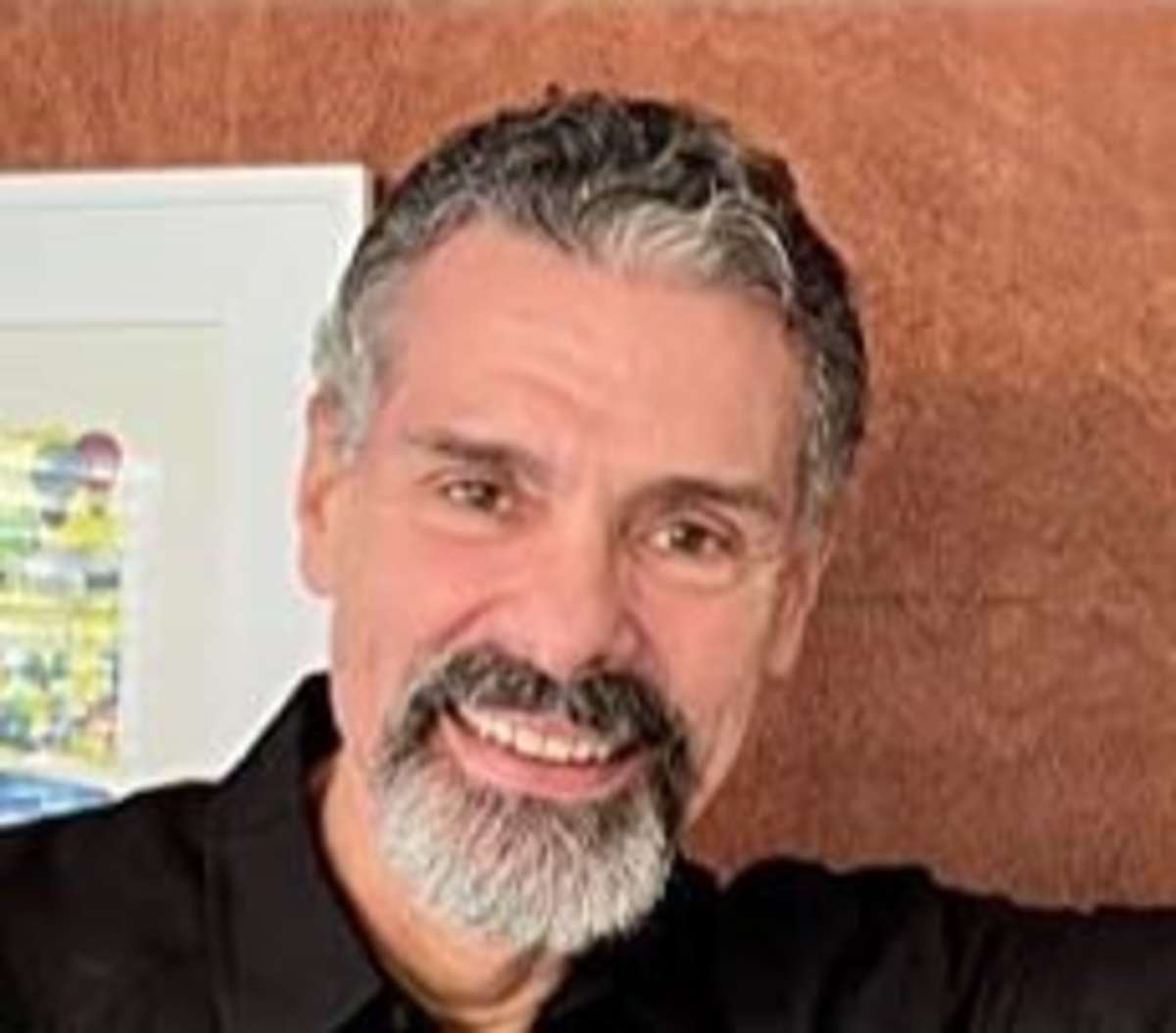
For me life began unfolding on Home Street—the South Bronx. A tough place. My Puerto Rican mother and Guatemalan father came to the United States motivated by their desperate flight from a life of poverty and despair. Their story like that of so many Latinx families new to the United States was one of social exclusion and marginality. They remained strangers in America. Although welcomed as a source of cheap and exploitable labor, cultural acceptance and the so-called good life eluded them. The crushing economic, political and cultural conditions of life they believed left behind in the old country appeared on this new land only now speaking English. Neither one of my parents had the opportunity to remain in school for very long and between the two of them they had about three years of education. Nonetheless, they learned to speak English quite well over time and my mother had a deep and abiding interest in education and encouraged us to study hard in school. Long before reading John Dewey’s idea that education is life itself I had internalized the value, especially from my mother.
Poetry looked for me in the barrio, on the subway, city parks, streets, stoops, corners, churches, and overlooked public spaces. I have always thought of this craft as graffiti on public culture, lines about the mixed feelings of learned truth that originate from the permanent Spanglish knot in my throat. The blank page received me without question, always open to barrio reveries and ready to heal wounds inflicted by those who cannot speak the mother tongue of marginal Latinx human beings. I write to find the right words that will help me understand the urban spaces of the inner city that gave me life. With poetry I aim to say something about the exclusion that is familiar to people who have their backs pressed against the wall by cultures of cruelty and divisive politics.
Poetry has been with me longer than I can remember, and it has been a companion to address with imaginative language the pulse of everyday life in disregarded places. The creative imagination patterned by a theological identity allows me to write about the experience of marginality, a divided society, the silence of God, the status-shackled church, the practices of hate, and those unheard. I have nourished myself on the words of favorite poets and not least among them was Rainer Maria Rilke’s the Book of Hours: Love Poems to God. Among the magnificent lines I read in the work these spoke to me deeply: “I love the dark hours of my being/My mind deepens into them/There I can find, as in old letters, the days of my life, already lived/and held like a legend, and understood.” Poetry is that thing that grabs life by the throat we are told by Robert Frost and I would add argues with God. This knot in my throat rearranges my thoughts about reality into expressions of lived truth and the longing for the fullness of life promised by God. Poetry for me seeks to understand the world “more full of weeping than you can understand,” as Yeats would say—a world in which I find myself weeping more these days. When I sit down to write I am overwhelmed by the feeling of wanting to lift the veil on cultures of malice especially in defense of the places I have come to suspect even God occasionally forgets.
For me the world is a walk around streets described in poetry as an imperfect Eden that invites us as I wrote to: "Come sit with me on the building steps/and whisper your sweetest dreams/so I can take them with me into other places/ to push away complaints." I believe poetry is a way for the creative imagination to move us to action, to articulate the sacred, pose new questions about God in human experience, and explore issues of truth in society, especially understood not as support for the prevailing cultural order, but the perpetual undoing and remaking of it. Poetry motivates us to dream into a different existence, decolonize the imagination from the limitations of a single culture and free God-talk from the imperialist mind-set of a singular understanding. Poetry carries its readers into an infinite sea that makes them aware there is no general agreement regarding what is theology and it offers faith communities ways to create a path to otherwise thinking, acting, believing, and living.[1]
[1] Walter Mignolo and Catherine Walsh, On Decoloniality: Concepts, Analytics, Praxis (Durham: Duke University Press, 2018), 4.